
by Milanka Sulejic
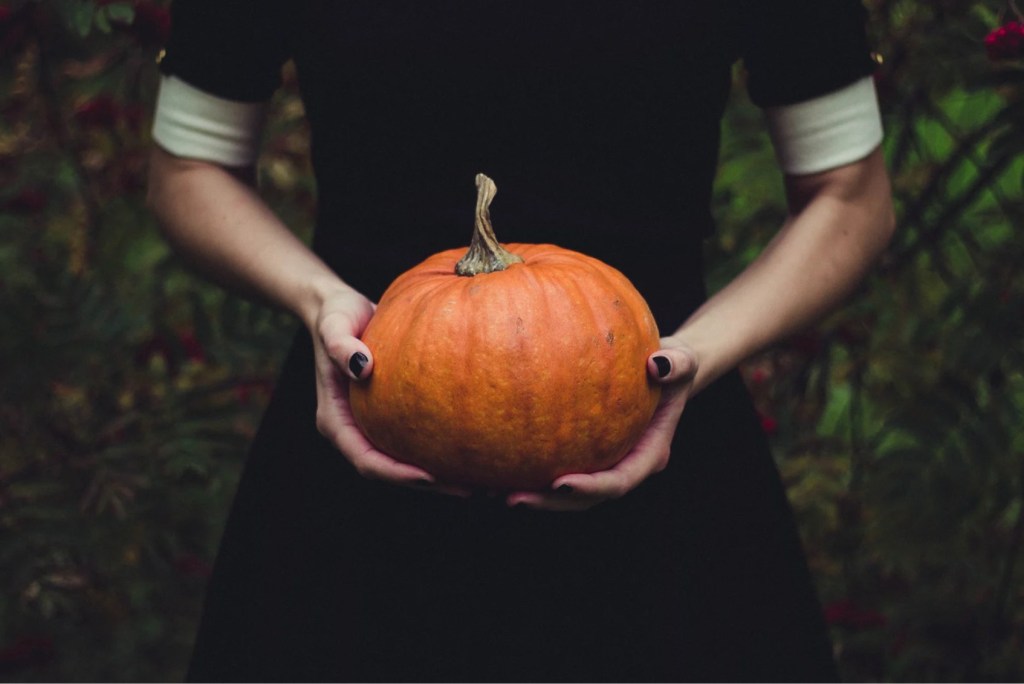
My mother taught me how to carve pumpkins when I was six. She said the trick was not to cut too deeply.
“You don’t want to ruin the face.”
I remember thinking this was very serious business.
We sat at the kitchen table with newspaper spread underneath the pumpkin, our hands sticky with seeds and orange pulp. My mother used a long kitchen knife. I used a butter knife.
She carved.
I watched.
Every year, she made the same face.
Two triangular eyes.
A crooked nose.
A wide mouth with six teeth.
“Why always the same?” I asked her once.
“Because I like it.”
“Don’t you want to make a different one?”
“No.”
“Why?”
She looked at the pumpkin. Then she looked at me.
“Some things don’t need changing.”
I didn’t understand. Children rarely understand the things adults say when they are actually talking about themselves.
After she died, I stopped carving pumpkins.
I didn’t mean to. Halloween simply became another date on the calendar.
October arrived.
The leaves changed.
The stores filled with orange decorations.
Children appeared on sidewalks in costumes.
And I did nothing.
The first year, I felt guilty.
The second year, I didn’t.
By the third, I had almost forgotten that my mother had ever liked Halloween.
Then, on October 12th, I found a pumpkin on my porch. It was small. Perfectly round. There was no note. No name. No explanation.
I assumed one of the neighborhood children had left it there.
I brought it inside.
A few days later, I carved it.
I don’t know why. I made the face my mother always made.
Two triangular eyes.
Crooked nose.
Six teeth.
When I finished, I put a candle inside.
That night, I dreamed about my mother. She was standing in the kitchen. She looked younger than I remembered her. She was laughing.
“You ruined the nose,” she said.
“I did not.”
“You always did.”
I woke smiling.
The pumpkin sat on the kitchen counter. The candle was still burning. I hadn’t left it lit. I blew it out.
The next morning, I threw the pumpkin away.
That afternoon, it was back on my porch.
The same pumpkin.
The same face.
The same six teeth.
I stared at it.
Then I carried it to the garbage again.
This time I drove it to the dumpster behind the grocery store. I watched it disappear beneath a pile of cardboard.
When I got home, there was another pumpkin on my porch.
This one was larger.
I didn’t carve it.
I left it outside.
The next morning, it was gone.
I thought that was the end of it.
It wasn’t.
Every October after that, a pumpkin appeared.
Always on October 12th.
Always different in size.
Always uncarved.
Always waiting.
I began photographing them. I kept a folder on my phone.
October 12.
October 12.
October 12.
Five years.
Six.
Seven.
I started wondering who was doing it. I asked the neighbors. Nobody knew. I checked my doorbell camera. Nothing.
The pumpkins simply appeared.
One year, I didn’t touch it. I left it on the porch. It stayed there for weeks.
It never softened.
Never collapsed.
Never rotted.
December came.
Snow covered it.
January.
February.
The pumpkin remained.
By spring, I had stopped finding it strange. That was probably the strangest part. We can get used to almost anything.
In April, I finally carried it into the woods behind my house.
I left it beneath a tree. When I turned around, I saw another one sitting on my porch.
I laughed.
Not because it was funny.
Because sometimes your choices become so ridiculous that laughter is the only reasonable response.
“Fine,” I said.
I picked up the pumpkin.
I brought it inside.
That night, I carved it.
The same face.
Two eyes.
Crooked nose.
Six teeth.
I lit the candle. Then I sat across from it.
“Okay,” I said.
The house was quiet.
“Why?”
Nothing.
I waited.
“Why do you keep sending these?”
The candle flickered.
I almost laughed again.
Then I noticed something. There was writing inside the pumpkin. Not carved into the outside. Written inside the hollow.
I reached through the opening and pulled out a small piece of paper.
My mother’s handwriting.
My hands began to shake.
There were only three words.
You remember me.
I sat down. For the first time in years, I cried. Not because I missed her. That was too simple.
I cried because I suddenly remembered something else. The last Halloween we spent together. She had been sick. She couldn’t carve the pumpkin.
So I did it.
I had forgotten.
Completely.
I remembered sitting at the kitchen table.
I remembered her watching me.
I remembered the knife slipping.
I remembered laughing.
I remembered her saying,
“Don’t cut too deeply.”
And I remembered the pumpkin.
The face.
Two eyes.
Crooked nose.
Six teeth.
My face.
Not hers.
Mine.
I had been the one who carved it.
All those years, I had believed the tradition belonged to her. It didn’t. It belonged to us.
I looked at the pumpkin. The candle flame moved slightly. And for just a moment, I smelled her perfume.
The old one.
The one she wore before I knew perfume could become a memory.
I closed my eyes.
“Mom?”
Nothing.
Then, very softly, from somewhere inside the house—
I heard her laugh.
Not a ghost’s laugh. Not something frightening. Just my mother’s laugh. The one I had forgotten.
I opened my eyes.
The pumpkin was beginning to rot.
For the first time.
Its skin softened.
The candle went out.
And I understood.
It had never been trying to stay alive.
It had been waiting for me to remember.
The next October, I carved a pumpkin again.
Then another.
And another.
I made different faces. Some were terrible. One looked like a cat. One looked vaguely like a politician. One had no face at all because I got distracted halfway through.
But on the kitchen table, beside them all, I put one small pumpkin.
Two triangular eyes.
Crooked nose.
Six teeth.
I didn’t carve it very deeply.
Some things, I finally understood, don’t need changing.
About the Author
Milanka Sulejic is a published writer whose work explores memory, family, grief, the uncanny, and the strange places where ordinary life and the supernatural overlap. Her fiction often finds the extraordinary hiding inside everyday objects, forgotten places, and small moments.


Leave a Reply